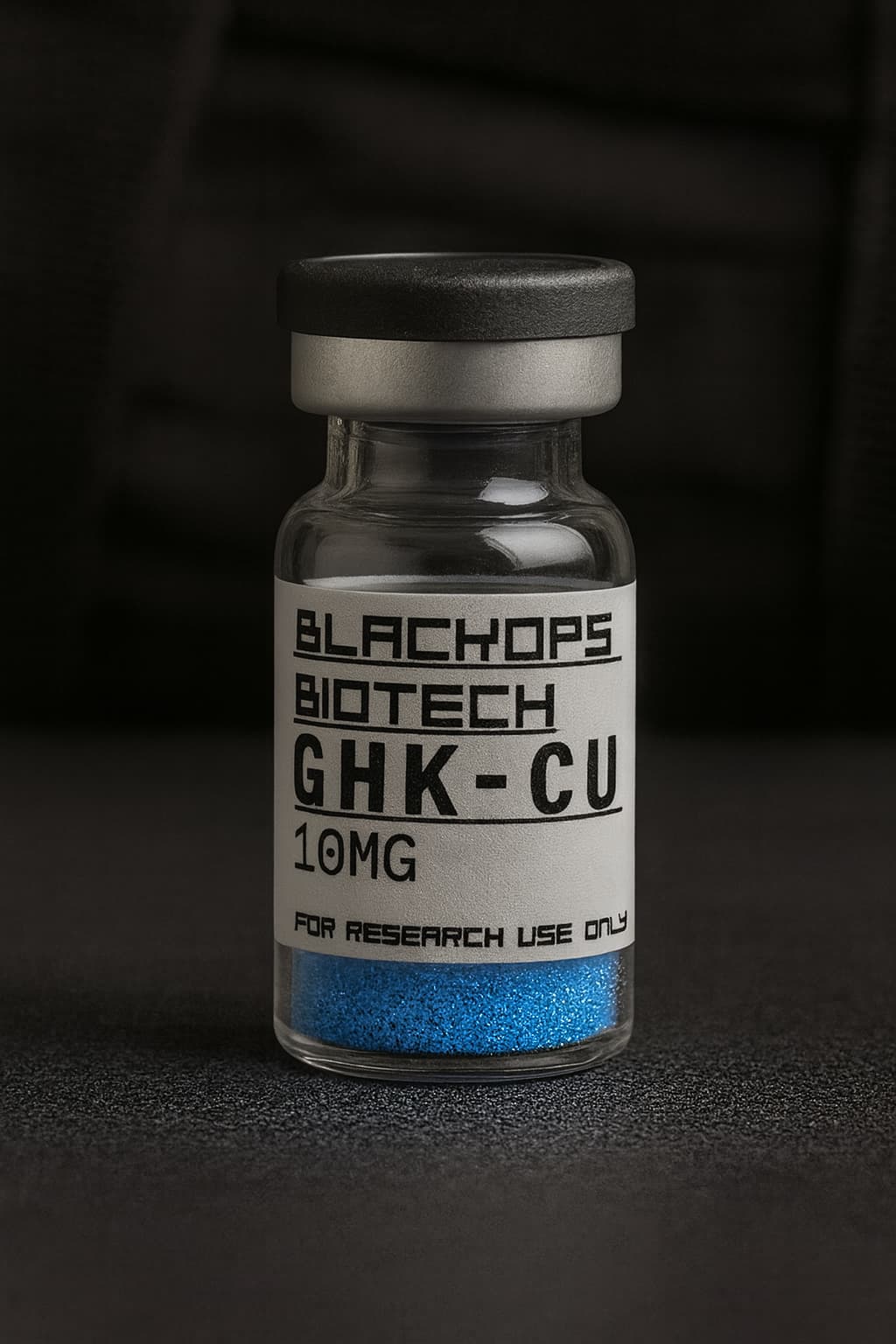
GHK-Cu
$30.00
Codename: Project Copper Key
Mission Type: Cellular Repair / Regeneration
Mission Overview
GHK-Cu (Glycyl-L-Histidyl-L-Lysine Bound with Copper) is a naturally occurring signal peptide found in the body. Levels decline with age, but when activated, GHK-Cu initiates powerful repair, regeneration, and protective processes. Consider it the body’s coded command to rebuild and restore.
Tactical Advantages
-
Tissue Repair: Accelerates wound healing and recovery at the cellular level.
-
Collagen & Skin Support: Enhances elasticity, firmness, and visible skin quality.
-
Hair & Nail Growth: Signals regenerative pathways for keratin tissues.
-
Anti-Inflammatory & Protective: Shields cells from oxidative stress and damage.
Intel Report
-
Natural GHK-Cu levels decline significantly with age and stress.
-
Restoring GHK-Cu signals boosts recovery, resilience, and visible regeneration.
-
Tactical deployment spans both performance recovery and longevity enhancement.
Arsenal Deployment
-
Stack with Wolverine Combo (BPC-157 + TB-500): Full-spectrum repair & recovery.
-
Stack with MOTS-C: Performance + metabolic resilience.
-
Stack with Project TESA (Tesamorelin): Lean growth & skin regeneration synergy.
For Research Use Only. Not for Human Consumption.
Description
Copper Peptide Complex | Research Peptide | For Laboratory Use Only
Overview
GHK-Cu (Glycyl-L-Histidyl-L-Lysine Copper Complex) is a naturally occurring copper-binding tripeptide studied extensively for its roles in tissue repair, collagen production, skin regeneration, and anti-inflammatory pathways. Research shows strong interest in its ability to influence gene expression and cellular signaling connected to regeneration and immune modulation.
BlackOps BioTech provides high-purity GHK-Cu 10mg for controlled laboratory research exploring wound healing, skin biology, and regenerative peptide science.
Hair & Follicle Studies
Researchers also explore GHK-Cu for potential roles in:
-
Hair follicle stimulation
-
Scalp tissue blood flow
-
Keratin production pathways
Key Research Points
Skin & Tissue Regeneration
GHK-Cu is widely studied in models evaluating:
-
Collagen & elastin synthesis
-
Reduced appearance of aging markers
-
Wound healing & tissue remodeling
-
Improved skin integrity and barrier function
Anti-Inflammatory & Antioxidant Effects
Research suggests GHK-Cu may influence:
-
Inflammatory cytokine activity
-
Antioxidant pathways & free-radical reduction
-
Cellular protection under stress
-
Gene expression linked to repair and regeneration
Additional information
| Milligram | 50 |
|---|
Reviews
There are no reviews yet.